

Colorado’s weather is anything but predictable. Buildings across Denver, Broomfield, and surrounding Colorado communities experience intense UV exposure, hailstorms, snow accumulation, freeze-thaw cycles, and sudden temperature changes throughout the year. These environmental conditions place tremendous stress on roofing systems, especially low-slope roofs commonly found on commercial, industrial, and multi-family properties.
Many property owners mistakenly assume that a low-slope roof is simply a flat roof. In reality, these roofing systems are specifically engineered with a slight pitch that allows water to drain while maximizing usable building space.
Understanding how low-slope roofing works—and more importantly, how to protect it – can save thousands of dollars in repairs while extending the life of your building.
Whether you own a warehouse in Denver, an office building in Broomfield, or a retail property elsewhere in Colorado, investing in proper low-slope roofing maintenance and protective roof coatings is one of the smartest decisions you can make.
What Is Low-Slope Roofing?
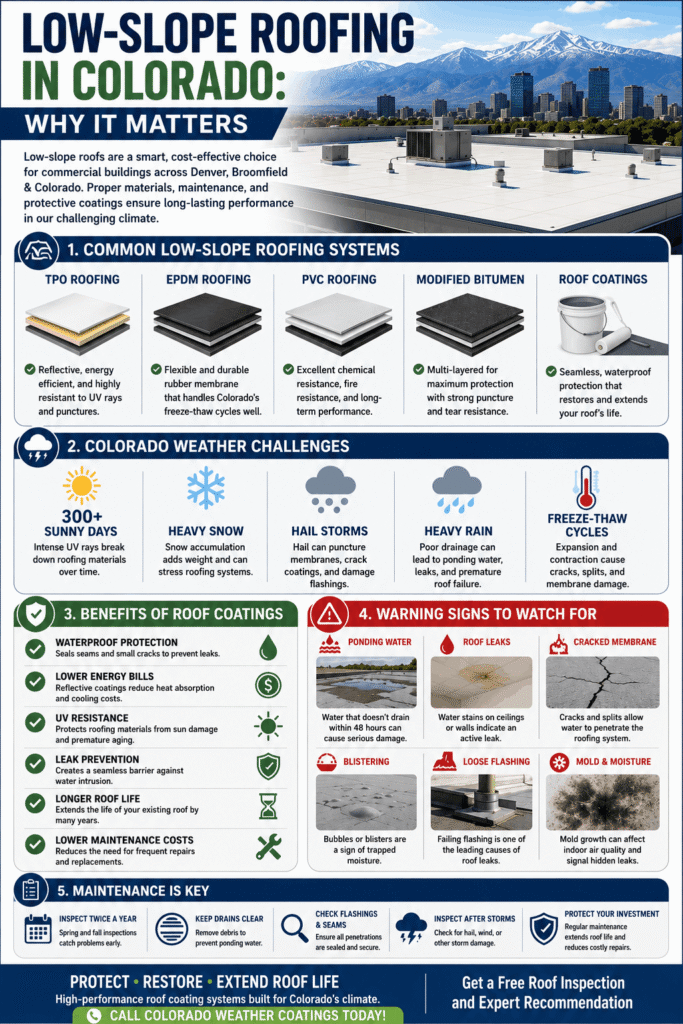
A low-slope roof is any roofing system with a pitch generally between ¼:12 and 3:12. Unlike steep residential roofs, low-slope roofs appear almost flat but still allow controlled water drainage.
These roofs are commonly installed on:
- Commercial buildings
- Retail centers
- Warehouses
- Medical facilities
- Apartment complexes
- Schools
- Government buildings
- Industrial facilities
Because of their design, low-slope roofs require specialized materials and maintenance techniques.
Why Low-Slope Roofing Is Popular in Colorado
Low-slope roofing has become the preferred choice for commercial construction throughout Colorado for several reasons.
1. Cost-Effective Construction
Low-slope roofs require fewer structural materials than steep roofs, reducing construction costs while maximizing interior space.
2. Easier Maintenance
Maintenance crews can safely inspect HVAC equipment, skylights, solar panels, and drainage systems with greater ease.
3. Energy Efficiency
Many modern low-slope roofs are finished with reflective roof coatings that reduce heat absorption during Colorado’s sunny summers.
Benefits include:
- Lower cooling costs
- Reduced HVAC workload
- Improved indoor comfort
- Increased building efficiency
4. Perfect for Large Buildings
Large commercial buildings benefit from expansive roof surfaces that accommodate:
- HVAC systems
- Solar panels
- Roof access
- Equipment installation
Why Colorado Weather Demands Strong Low-Slope Roofing
Colorado experiences some of the most challenging weather conditions in the United States.
Common threats include:
- Heavy snowfall
- Ice dams
- Large hail
- High winds
- Intense UV radiation
- Freeze-thaw expansion
- Flash rainstorms
These conditions can rapidly deteriorate roofing materials if the roof is not properly protected.
Common Problems with Low-Slope Roofs
Ponding Water
Poor drainage causes water to remain on the roof for extended periods.
This can lead to:
- Membrane deterioration
- Leaks
- Mold growth
- Structural damage
Membrane Cracks
Colorado’s temperature swings cause roofing materials to expand during the day and contract at night.
Over time this creates:
- Surface cracks
- Splits
- Open seams
UV Damage
Denver averages over 300 days of sunshine annually, exposing roofing systems to constant ultraviolet radiation.
UV damage causes:
- Brittleness
- Surface chalking
- Membrane breakdown
- Premature aging
Hail Damage
Colorado ranks among the nation’s leaders for severe hailstorms.
Hail can:
- Puncture membranes
- Damage flashing
- Crack coatings
- Create hidden leaks
Flashing Failure
Roof penetrations around:
- Pipes
- HVAC units
- Skylights
- Vents
are common locations for leaks if flashing deteriorates.
Best Roofing Materials for Low-Slope Roofs
Different buildings require different roofing systems.
The most common options include:
TPO Roofing
Benefits:
- Reflective surface
- Excellent UV resistance
- Energy efficient
- Durable seams
Ideal for commercial buildings throughout Denver and Broomfield.
EPDM Roofing
Often called rubber roofing.
Advantages:
- Excellent flexibility
- Handles freeze-thaw cycles
- Long lifespan
- Cost-effective
PVC Roofing
Known for:
- Chemical resistance
- Fire resistance
- Waterproof protection
- Long durability
Perfect for restaurants and industrial facilities.
Modified Bitumen
Offers:
- Multi-layer protection
- Excellent waterproofing
- Strong puncture resistance
Frequently used on schools and office buildings.
Roof Coating Systems
Rather than replacing an aging roof, many Colorado property owners choose protective roof coatings.
Roof coatings can:
- Restore aging roofs
- Seal minor cracks
- Prevent leaks
- Improve reflectivity
- Reduce maintenance costs
- Extend roof life by many years
Why Roof Coatings Matter for Low-Slope Roofs
Roof coatings have become one of the most cost-effective roofing solutions available.
Instead of a complete replacement, coatings create a seamless waterproof membrane over the existing roof.
Major benefits include:
- Lower project costs
- Minimal business disruption
- Faster installation
- Waterproof protection
- Energy savings
- Extended roof lifespan
How Colorado’s Climate Affects Low-Slope Roofing
Colorado weather presents unique roofing challenges.
Winter
- Heavy snow loads
- Ice accumulation
- Freeze-thaw cycles
Spring
- High winds
- Severe hailstorms
- Heavy rain
Summer
- Extreme UV exposure
- High rooftop temperatures
Fall
- Debris buildup
- Drainage issues
- Preparing for winter weather
Routine inspections before and after each season help prevent expensive repairs.
Signs Your Low-Slope Roof Needs Attention
Watch for these warning signs:
- Water stains on ceilings
- Ponding water
- Cracked membrane
- Blisters
- Loose flashing
- Mold growth
- Interior leaks
- Rising energy bills
- Visible roof damage after hail
Early repairs are always less expensive than major replacements.
Preventive Maintenance Tips
Property owners should schedule professional inspections at least twice each year.
Maintenance should include:
- Cleaning roof drains
- Removing debris
- Checking flashing
- Inspecting seams
- Looking for punctures
- Repairing coating damage
- Inspecting after severe storms
Preventive maintenance dramatically extends roof life.
Why Professional Roof Inspections Matter
Professional inspections identify hidden issues before they become costly repairs.
Experienced contractors use:
- Moisture detection
- Infrared inspections
- Core sampling
- Drainage analysis
- Membrane evaluations
Annual inspections also help document roof condition for insurance claims after hail events.
Why Colorado Property Owners Choose Roof Coatings
Across Denver and Broomfield, more commercial property owners are choosing roof coatings because they:
- Cost less than replacement
- Improve building efficiency
- Reduce cooling expenses
- Protect against UV damage
- Resist water intrusion
- Extend existing roof life
- Improve property value
For many buildings, a professionally installed coating system can delay a costly replacement by several years.
Final Thoughts
Low-slope roofing plays a vital role in protecting commercial and residential buildings throughout Denver, Broomfield, and Colorado. While these roofing systems are durable and practical, they require regular inspections, timely maintenance, and the right protective solutions to withstand Colorado’s demanding climate.
If your roof is showing signs of aging, leaks, or weather damage, don’t wait until small issues become major expenses. Professional inspections and high-quality roof coating systems can help extend your roof’s lifespan, improve energy efficiency, and protect your investment for years to come.
Frequently Asked Questions
What is considered a low-slope roof?
A low-slope roof typically has a pitch between ¼:12 and 3:12, providing enough slope for drainage while maintaining a nearly flat appearance.
How long does a low-slope roof last?
Depending on the material and maintenance, low-slope roofs generally last 20 to 40 years. Roof coatings can significantly extend their service life.
Are roof coatings better than roof replacement?
If the existing roof is structurally sound, a roof coating is often a more affordable and less disruptive alternative that restores waterproof protection and improves energy efficiency.
Can low-slope roofs handle Colorado snow?
Yes. Properly designed low-slope roofing systems are built to support Colorado snow loads, provided drainage systems remain clear and the roof is well maintained.
How often should low-slope roofs be inspected?
Professional inspections are recommended at least twice per year, ideally in the spring and fall, and after major hail or windstorms.
What is the best roofing material for Colorado?
TPO, EPDM, PVC, modified bitumen, and professionally applied roof coating systems all perform well in Colorado when selected for the building’s specific needs.
Protect Your Low-Slope Roof with Colorado Weather Coatings
Whether your building is in Denver, Broomfield, or anywhere in Colorado, protecting your low-slope roof today can help you avoid costly repairs tomorrow. Colorado Weather Coatings specializes in professional roof coating systems, inspections, maintenance, and restoration solutions designed to withstand Colorado’s challenging climate.
📞 Call Colorado Weather Coatings today at 303-435-6799 to schedule a professional roof inspection and discover how our high-performance roof coating solutions can extend the life of your roof while improving your building’s energy efficiency.