

Quick Answer
Most commercial roofs in Colorado should be professionally inspected at least twice a year — once in spring and once in fall — with additional inspections after any major hailstorm, windstorm, or heavy snow event. Buildings with flat or low-slope roofs, older roofing systems, or a history of storm damage may need quarterly inspections. Skipping regular inspections is one of the fastest ways to turn a minor repair into a full roof replacement.
Why Colorado’s Climate Makes Roof Inspections a Bigger Deal
Colorado doesn’t have “typical” roofing weather — it has some of the most punishing conditions in the country for commercial roofing systems. Business owners who assume their roof can go a year or two without a look-over are often the ones who end up with emergency leaks, mold issues, or six-figure replacement bills.
A few reasons Colorado roofs face accelerated wear:
- Hail season. Colorado’s Front Range sits in one of the most hail-prone corridors in the United States. A single severe storm can bruise or puncture membrane roofing, crack coatings, and dent HVAC curbs and flashing — damage that isn’t always visible from the ground.
- Intense UV exposure. At elevation, UV radiation is significantly stronger than at sea level. Over time, this accelerates the breakdown of roofing membranes, coatings, and sealants, making them brittle and prone to cracking.
- Freeze-thaw cycles. Colorado can swing from a 60-degree afternoon to a hard freeze overnight. Water that seeps into small cracks expands as it freezes, widening those cracks with every cycle — a slow, silent form of structural damage.
- Heavy, wet spring snow. Late-season snowstorms can dump significant weight on flat and low-slope commercial roofs, stressing seams, drains, and structural supports.
- High wind events. Wind gusts along the Front Range and in mountain-adjacent areas can lift membrane edges, loosen flashing, and tear away rooftop equipment covers.
Each of these stressors compounds over time. A roof that looked fine last year can develop serious vulnerabilities after just one bad storm season — which is exactly why a fixed “check it every couple of years” mindset doesn’t hold up in this climate.
Recommended Inspection Schedule for Colorado Commercial Roofs
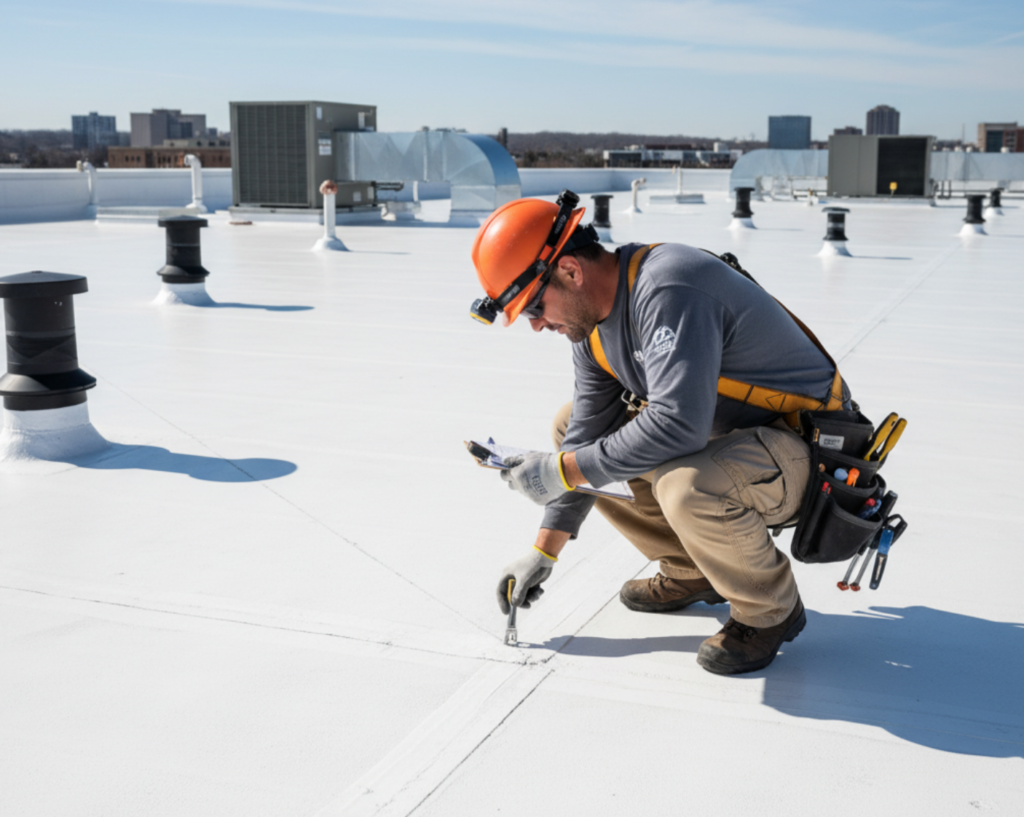
While every roof is different, here’s a general framework that fits most commercial properties in Colorado:
1. Bi-Annual Inspections (Spring and Fall) — Baseline for Every Roof
- Spring inspection: Assesses winter damage — cracked flashing, ice damage, clogged drains, and membrane stress from freeze-thaw cycles.
- Fall inspection: Prepares the roof for winter by checking seals, insulation, drainage, and any summer storm or UV damage before snow accumulates.
2. Post-Storm Inspections — Non-Negotiable
Any time your building experiences hail, high winds, or a significant snow event, schedule an inspection within days, not months. Hail damage in particular is often invisible from ground level and can void manufacturer warranties if left unaddressed, since most warranties require damage to be reported and repaired within a specific window.
3. Quarterly Inspections — For Higher-Risk Roofs
Consider a more frequent schedule if your roof:
- Is more than 15 years old
- Has a flat or low-slope design (which drains slower and pools water more easily)
- Has a documented history of leaks or previous storm damage
- Sits near mountains or in a high-wind corridor
- Supports heavy rooftop equipment (HVAC units, solar panels, signage)
4. Ongoing Visual Checks Between Professional Visits
Facility managers can do simple, low-cost checks between formal inspections: looking for ponding water 48 hours after rain, checking interior ceilings for stains, and confirming drains aren’t blocked by debris. These aren’t a substitute for a licensed inspection, but they can catch obvious problems early.
What a Professional Commercial Roof Inspection Actually Covers
A thorough inspection goes well beyond a quick visual walk-through. A qualified commercial roofing contractor typically evaluates:
- Membrane and coating condition — checking for cracking, blistering, bubbling, or UV degradation
- Seams and flashing — the most common failure points on flat and low-slope roofs
- Drainage systems — scuppers, gutters, and internal drains checked for clogs or slow drainage that causes ponding
- Penetrations — HVAC curbs, vent stacks, skylights, and conduit run-throughs, all common leak sources
- Insulation and substrate — using moisture detection tools to identify trapped water beneath the surface, often invisible to the naked eye
- Structural signs of stress — sagging areas, visible deflection, or signs of previous water intrusion
- Coating thickness and wear — particularly relevant for roofs treated with elastomeric or silicone coatings, which need reapplication at certain intervals to stay effective
Documenting all of this with dated photos and a written report also matters for insurance purposes — if you ever need to file a storm damage claim, having a clear inspection history makes the process far smoother.
The Cost of Skipping Inspections
It’s tempting for a business to treat roof inspections as a discretionary expense — something to put off until there’s an obvious leak. But in Colorado’s climate, that approach almost always costs more in the long run:
- Small problems become big ones. A $500 flashing repair caught early can turn into a $15,000 deck replacement if water intrusion goes unnoticed for a season.
- Warranties can lapse. Most commercial roofing manufacturers require documented, regular maintenance to keep warranties valid. Skipping inspections can void coverage entirely.
- Insurance claims get harder. Without a documented inspection history, insurers may dispute whether damage was pre-existing or storm-related, delaying or reducing your payout.
- Energy costs creep up. A degraded roofing membrane or coating loses reflective and insulating properties, driving up HVAC costs during Colorado’s hot summers and cold winters.
- Tenant and liability risk. Leaks that damage inventory, equipment, or interior finishes can create liability issues beyond the roof itself.
Regular inspections are, in almost every case, the cheapest form of roof maintenance available.
FAQ: Commercial Roof Inspections in Colorado
Q: How much does a commercial roof inspection cost? A: Costs vary by roof size, accessibility, and system type, but a professional inspection is a small fraction of the cost of even a minor unplanned repair. Colorado Weather Coatings can provide an exact quote based on your property.
Q: Can I inspect my own commercial roof instead of hiring a professional? A: Basic visual checks (looking for ponding water or debris) are fine between professional visits, but a trained inspector uses moisture detection equipment and knows what warning signs look like before they become visible leaks — something most facility staff aren’t trained to catch.
Q: Does insurance require regular roof inspections? A: Many commercial property insurance policies either require or strongly favor documented maintenance schedules, and having inspection records can make hail or storm damage claims significantly easier to process.
Q: How long does a typical commercial roof inspection take? A: This depends on roof size and complexity, but most inspections can be scheduled quickly and completed without disrupting daily business operations.
Q: What’s the difference between a roof inspection and roof maintenance? A: An inspection identifies problems; maintenance fixes them. Ideally, inspections lead directly into a maintenance plan that addresses issues before they become emergencies.
Protect Your Building — Schedule Your Inspection Today
Colorado’s weather doesn’t give commercial roofs a break, and a “wait and see” approach almost always ends up being the most expensive option. Whether your roof is due for its seasonal check-up or you’ve had a recent storm roll through, getting ahead of small issues is the easiest way to protect your building, your tenants, and your bottom line.
Don’t wait for a leak to find out your roof needs attention. Call Colorado Weather Coatings today at 303-435-6799 to schedule your commercial roof inspection.